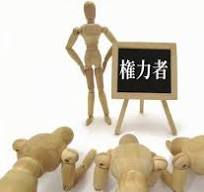
Draw a Lesson is a precious gem: A bad work is a bad role model
Draw a lesson means learning from the actions of others that have no effect on you.

When writing a novel in Japanese, there are many techniques and basic rules to make it easier to read, rather than focusing on typos, omissions or grammatical correctness.
For example, subjects such as I or you are removed if they are clear from the context.
Similarly, if you know who he or she is, cut it out. If you have to write it down, write the name of who you are referring to, for example, Taro for he and Hanako for she.
!, ?, and …… are also generally cut out because they make sentences look cheap.

The common mistakes made by amateur writers introduced by professional writers who serve as judges for literary awards are also very instructive.
One of the things they often do is to write a work while blurring the characters, especially the protagonist.
The article states that some of the submitted works do not even include the name, age, or gender of the protagonist.
No way, that's so stupid. I thought it was common sense that not writing the name or gender of the protagonist was impossible. But then I had the opportunity to witness it in reality.

I recently read a novel written by an amateur writer.
The work does not state any basic details about the protagonist, such as her name, gender, age, appearance, clothing, or personality, and the story progresses unilaterally.
If I say Norwegian Wood: My own way, which imitates the masterpiece Norwegian Wood, you might get an image of it. Without any description of the characters psychology or the situation, it drags you to the end of a sad pure love story.

It's not interesting at all.
Rather than being uninteresting, the introduction of the protagonist and other characters is so insufficient that I can only imagine what they are like from fragmented sentences, which just leaves I feeling unsettled.
It was not something that could be left to the imagination of each individual readers, but the information missing was so necessary that even that was impossible.

I was quite shocked. I have never read such a flawed novel.
If I think about it, that makes sense.
The majority of the works, I have read so far have been professional works written by professional authors and reviewed by editors at publishing companies.
Naturally, it uses all the techniques of expression found in novels, and is designed to draw the readers into the world of the work after just one read.

I have never joined a literary club or shared a fanzine. It was the first time I had ever read an amateur work.
One of the skills a writer needs is to be able to see own writing objectively from the third person.
As we write, we imagine a scene filled with emotional characters.
In the case of amateur writers, even if the printed text is difficult to understand the image in their heads unconsciously fills in the missing parts, and they believe that the missing text will be conveyed accurately to the readers.
It is important to have the skill to always revise our writing from the perspective of a first-time readers, without assuming that our writing will get through to the readers or that it might not get through to them.

What happens if we ignore the techniques and basic rules of novel writing? Norwegian Wood: My Own Way taught me plenty.
Even professional writers say that bad and failed works are a good way to learn novels.
In famous works, the expression is good and it is difficult to see the flaws, but in bad works or failed works, the flaws are highlighted and easy to see.

I should make it clear that the purpose of this article is not to ridicule the amateur writer or her work.
Rather, I want to praise her for completing a novel.
I have also written many practice novels. Writing a novel is a difficult task that requires time and effort. We can't write a novel half-baked.
Rather than simply ridiculing this novel as a bad or a failed, I want to use it as a warning. In that sense, this novel has become a memorable one.