What a Disaster! Let's All Play to the Heavens: The Origin of the "牛耳る(Gyujiru: Cow's Ear)"
Japanese has a word called "牛耳る(Cow's Ear)."
In Japanese, it is used to describe someone who takes the lead in some situation, but why the "耳(Ear)" of a "牛(Cow)"?
This has to do with ancient Chinese customs.
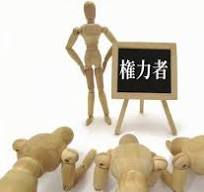
About 2,500 years ago, there was a time called the "Spring and Autumn Period," when the entire Chinese mainland was divided into rule by 140 feudal lords, large and small.
Nominally, the King of Zhou who resided in Luoyang to reigned supreme, but in reality, history moved forward as the powerful loads of the time issued order to the smaller loeds.
The great lords would occasionally invite their neighboring smaller lords to hold general meetings. This was called a "Kaimei."
During the covenant ceremony, in which everyone swore to the heavens that they would abide by the decisions made at this meeting, a sacrificial cow was offered.
The cow used for this sacrifice were carefully selected to be males with pure coats and no blemishes.
At that time, livestock such as cows, sheeps, and pigs were offered as sacrifices on various occasions. Of there, cows were considered the most valuable livestock, and so were used for sacrifices on important occasions.
The ceremony for making a pact began with cutting the ear of a cow. The blood that flowed out was then collected in a dish and passed around for the lords attending the meeting to drink, a custom known as "Souketsu."
The person who had to cut off the ear in this case was the most senior person present――the great lord who called for the alliance. The other lords followed the instructions of this great lord.
From this, the "耳(Ear)" from "牛(Cow)" gave rise to the expression "牛耳る." Naturally, in Chinese it is written as "牛耳," and the meaning is the same.
By the was, "Sacrifice" is written as "犠牲" in Chinese, and "犠" is that represents a pure color and "牲" is that represents a complete body without any blemishes.
Different ethnic groups have different ways of making alliances.
The nomadic peoples of the north had a custom called "Dankotsu," in which they poured wine into a vessel made from a human skull, and among the ethnic groups in southern China, where Chinese culture had not yet become widespread, there was a custom called "Keihi" in which people would cut their own shoulders or arms and then drink the blood that flowed out.
The cow is also associated with the "Twenty-eight mansions," a constellation unique to ancient China.
The star that corresponds to the current constellation of Capricornus Beta is named "Gyushuku." It is also called "Kengyu" and is one of the origins of the Star Festival.
Furthermore, an important character called "牛魔王(Cow Demon King) appears in Saiyuki, and cows have been a livestock closely related to the Han Chinese since ancient times.
The cow has a majestic physique and a dignified presence. Therefore, the Chinese word "牛(
Cow)" also impliese the nuance of "High Level" or "Wonderful." Thre is also a word in internet slang called "大牛(Big Cow)" which refers to a high-ranking person.


